Ethereum's Weekly RSI Reaches 30: A Signal That Has Marked Every Major ETH Bottom
Ethereum (ETH/USD) is flashing one of its rarest technical signals in March 2026. The weekly Relative Strength Index (RSI) has touched the 30 threshold — a level that has only appeared three times in Ethereum's entire eight-year trading history. The first occurrence marked the 2018 bear market bottom at $83. The second came during the June 2022 capitulation at $880. And now, with ETH trading in the $1,900–$2,100 range, this signal is appearing for the third time.
For technically-minded crypto traders, this is not a signal to ignore. Here is a complete breakdown of the current setup, the key price levels to watch, and how automated trading tools can help you execute with precision in this volatile environment.
ETH/USD Technical Picture: March 2026
Ethereum's current chart structure tells a story of extended bearish pressure colliding with historically significant oversold readings:
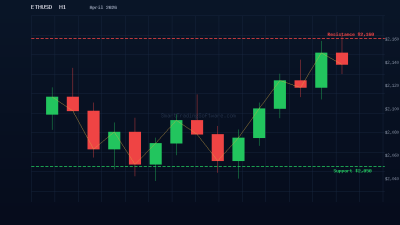
- Current price range: $1,900–$2,100 (consolidating near multi-year structural support)
- Weekly RSI: ~30 — the most oversold reading in ETH's history outside two confirmed cycle bottoms
- 14-day RSI: 59.6 (rebounding from lows, showing short-term accumulation)
- 20-day SMA: ~$1,967 (acting as near-term support on daily timeframe)
- 50-day SMA: ~$2,424 (first major overhead resistance to reclaim)
- 200-day SMA: ~$3,394 (long-term bearish trend — price is far below this level)
The key pivot levels from current positioning are: $2,060 (S1 support / immediate floor), $1,895–$1,905 (major demand zone), $1,800 (psychological and structural support), and on the upside $2,378 (R1 resistance), $2,792 (R2), and $2,424 (50-day SMA — the critical level to reclaim for a genuine recovery).
Trading the ETH Weekly RSI Bottom Signal
The two previous instances where Ethereum's weekly RSI touched 30 both resulted in significant multi-month rallies. However, trading this signal requires patience and precise execution — the bottom process can be volatile with deep intra-day wicks before the actual reversal confirms.
Bullish Scenario — Accumulation Setup
The ideal entry zone for a long-bias trade using the weekly RSI bottom signal is the $1,895–$2,060 demand corridor. This area aligns with the S1 daily pivot and historically significant structural support.
- Entry zone: $1,900–$2,060 on any bullish daily close with RSI divergence confirmation
- Stop loss: Below $1,800 (outside the structural support zone)
- Target 1: $2,378 (R1 pivot — approximately 15–20% upside from entry)
- Target 2: $2,424 (50-day SMA reclaim — momentum confirmation)
- Target 3: $2,792 (R2 pivot — trend recovery zone)
- Risk/Reward: ~1:3 at conservative targets
Bearish Invalidation Scenario
The bull case is invalidated if Ethereum breaks and closes on a weekly basis below $1,800. That would open downside to $1,600 and potentially retest the $1,400 zone. The base case (range consolidation between $2,060 and $2,378) remains the most likely near-term outcome until a clear directional break occurs.
Why Automate Your Ethereum Trading Strategy
Crypto markets operate 24/7, and historical bottom signals like the weekly RSI=30 can take weeks or even months to fully play out. Manual trading around such setups is exceptionally difficult — it requires monitoring for precise entry triggers at any hour, maintaining stop-loss discipline during periods of extreme volatility, and resisting the urge to exit winners too early.
Our Crypto Bot for MetaTrader 4/5 (€621) is designed specifically for the cryptocurrency market. It operates continuously, detecting technical triggers and executing trades based on a defined ruleset — giving you consistent exposure to setups like the current ETH accumulation zone without requiring you to be at your screen around the clock. It supports all major crypto pairs including ETH/USD, BTC/USD, and more.
For the specific RSI divergence and momentum signals discussed in this analysis, the RSI Divergence Bot (€421) is ideally suited. It automatically identifies the divergence patterns between price and RSI that signal exhausted trends — exactly the type of pattern forming on Ethereum's charts right now. Rather than manually watching for a higher RSI low against a lower price low, the bot detects and acts on these signals in real time.
We also recommend validating your ETH strategy parameters before deploying live capital. The Indicators Tester (€155) allows you to backtest your settings against years of Ethereum price history, helping you optimize stop-loss levels, entry triggers, and take-profit targets for the current market environment.
Key Levels to Watch for ETH/USD (March 20, 2026)
These are the price levels that will define Ethereum's next significant move:
- $2,792 — R2 pivot; reclaiming this level signals a genuine medium-term trend reversal
- $2,424 — 50-day SMA; the critical level bulls must reclaim to shift momentum
- $2,378 — R1 pivot resistance; first meaningful upside target from current levels
- $2,060 — S1 support / immediate floor; losing this on a daily close is bearish
- $1,895–$1,905 — Major structural demand zone; ideal accumulation area
- $1,800 — Psychological and structural support; last line of defence for the bull case
The most important weekly close to watch is Saturday's candle. A weekly close above $2,100 with the RSI recovering from 30 toward 40+ would mirror the setup seen before both of the previous major ETH recoveries.
Getting Started with Automated Ethereum Trading
To capitalize on high-probability technical setups like the current ETH weekly RSI bottom signal, follow these steps:
- Identify the setup: Confirm the weekly RSI is recovering from the 30 zone and look for bullish divergence on the daily chart (price lower low + RSI higher low)
- Choose your automation tool: Deploy the Crypto Bot for broad cryptocurrency coverage, or the RSI Divergence Bot to automate the specific divergence entry pattern
- Backtest your parameters: Run historical ETH/USD simulations through the Indicators Tester using the $1,900–$2,060 entry zone and $2,378+ targets
- Set your risk parameters: Configure position sizing so that a stop below $1,800 represents no more than 1–2% of your total account risk
- Deploy and monitor: Install on MT4 or MT5, activate the bot, and let it execute systematically during what could be one of Ethereum's most significant technical turning points in years
Ethereum's weekly RSI signal is rare, historically significant, and already attracting attention from institutional and retail traders alike. The difference between capturing this opportunity and missing it often comes down to execution discipline — exactly what algorithmic trading delivers. Ready to explore the best approach for your portfolio? Contact our trading specialists for a personalized recommendation.