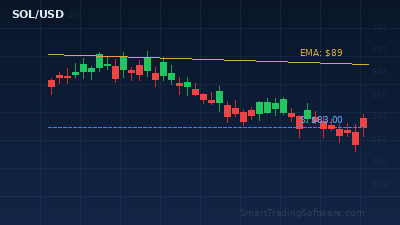
Bitcoin Consolidates Near $68,000: Trading BTC's Range with RSI Divergence Strategies
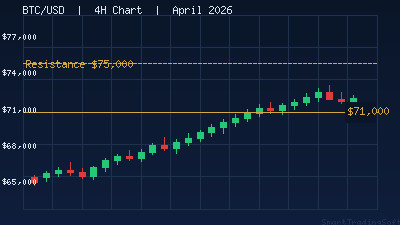
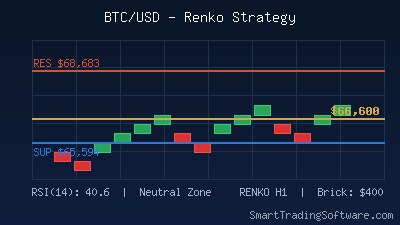
Bitcoin has entered a significant consolidation phase in March 2026, trading within a well-defined range between $65,594 and $71,468. After pulling back roughly 45% from its October 2025 all-time high of $126,080, BTC now sits beneath both its 50-day and 200-day exponential moving averages, reflecting sustained macro-level pressure. The 14-day RSI reads 49.08 — squarely in neutral territory — signaling that neither bulls nor bears have decisive control. For active traders, this type of sideways price action presents a prime opportunity to deploy RSI divergence strategies that can identify the next breakout direction before the crowd catches on.
Why RSI Divergence Works in Ranging Bitcoin Markets
RSI divergence occurs when the price action and the Relative Strength Index move in opposite directions. A bullish divergence forms when BTC prints lower lows while the RSI simultaneously prints higher lows, suggesting that selling momentum is fading even as price drifts lower. Conversely, a bearish divergence appears when price creates higher highs but RSI creates lower highs — a sign that buying pressure is weakening beneath the surface.
In the current BTC range of $65,594 to $71,468, these divergence signals become especially powerful. Each test of support near $65,500 or resistance near $71,500 can be evaluated against the RSI to determine whether the level will hold or break. When price approaches the $65,594 support zone and forms a bullish RSI divergence on the 4-hour chart, it often signals a high-probability long entry with a tight stop-loss below the range floor.
Entry Parameters for a Long Setup
Wait for BTC to test the $65,000–66,000 support zone while the 14-period RSI on the H4 chart prints a higher low versus its previous reading at that price level. Enter a long position on the close of the confirmation candle. Set your stop-loss 1.5% below the swing low — roughly around $64,500 — and target the upper range boundary near $71,400 for a reward-to-risk ratio of approximately 3:1.
Entry Parameters for a Short Setup
If BTC rallies toward the $71,000–$71,500 resistance zone and forms a bearish RSI divergence (price makes a higher high but RSI makes a lower high), consider a short entry on the H4 close. Place your stop-loss 1.5% above the swing high around $72,500, with a take-profit target at $66,000, again offering roughly 3:1 risk-reward.
Automating RSI Divergence Detection with Trading Bots
Manually scanning for RSI divergence across multiple timeframes is time-consuming and error-prone, especially in the 24/7 crypto market where setups can form at any hour. This is where automated trading tools deliver a clear edge. The STS Crypto Bot is specifically designed for cryptocurrency markets and can execute trades around the clock on MetaTrader 5, ensuring you never miss a setup that forms during off-hours or during periods of sudden volatility.
For traders who prefer to focus specifically on divergence signals, the STS RSI Divergence Bot automates the entire process of detecting bullish and bearish RSI divergences and placing trades with predefined entry, stop-loss, and take-profit levels. It eliminates emotional decision-making — one of the biggest obstacles for manual traders — and ensures consistent execution of your strategy parameters.
Key Bitcoin Levels to Watch in Late March 2026
The technical picture for BTC revolves around several critical price zones. On the downside, the $65,594 level represents immediate range support, with stronger structural support at the psychological $60,000 mark. A break below $60,000 could accelerate selling toward the $55,000 area. On the upside, $71,468 serves as the first resistance hurdle, followed by $73,868 — a close above which could open the door to a retest of the $80,000 region.
The neutral RSI reading of 49.08 suggests that a significant directional move is building. The EMAs on the daily chart currently flash a strong bearish signal, with price trading below all five key exponential moving averages (10, 20, 50, 100, and 200-period). However, the ranging price action and the lack of RSI extremes suggest that bears may be running out of momentum, making this an ideal environment to watch for bullish divergence signals near support.
Backtesting Your Strategy Before Going Live
Before deploying any RSI divergence strategy with real capital, it is essential to validate its performance against historical data. The STS Indicators Tester allows you to backtest RSI-based strategies across multiple timeframes and instruments, giving you detailed performance metrics including win rate, profit factor, and maximum drawdown. This data-driven approach ensures that you enter the live market with confidence in your strategy’s statistical edge.
Getting Started with Automated Bitcoin Trading
Setting up an automated RSI divergence strategy for BTC takes just a few steps:
1. Open a MetaTrader 5 account with a broker that offers BTC/USD trading and ensure your account is funded with appropriate capital for your risk tolerance.
2. Download and install the STS Crypto Bot or the STS RSI Divergence Bot on your MT5 platform.
3. Configure the bot parameters to match the current market conditions: set the RSI period to 14, the divergence lookback to 20 bars on the H4 timeframe, and define your risk per trade (recommended 1-2% of account balance).
4. Run a backtest using the STS Indicators Tester on at least 6 months of BTC/USD data to validate your settings.
5. Activate the bot on a demo account first, then transition to live trading once you are satisfied with the results.
Whether Bitcoin breaks above $71,468 to target $80,000 or revisits the $60,000 support zone, having an automated RSI divergence strategy in place ensures you are prepared for both scenarios. For questions about setting up your trading system or selecting the right bot for your needs, visit our contact page and our team will help you get started.